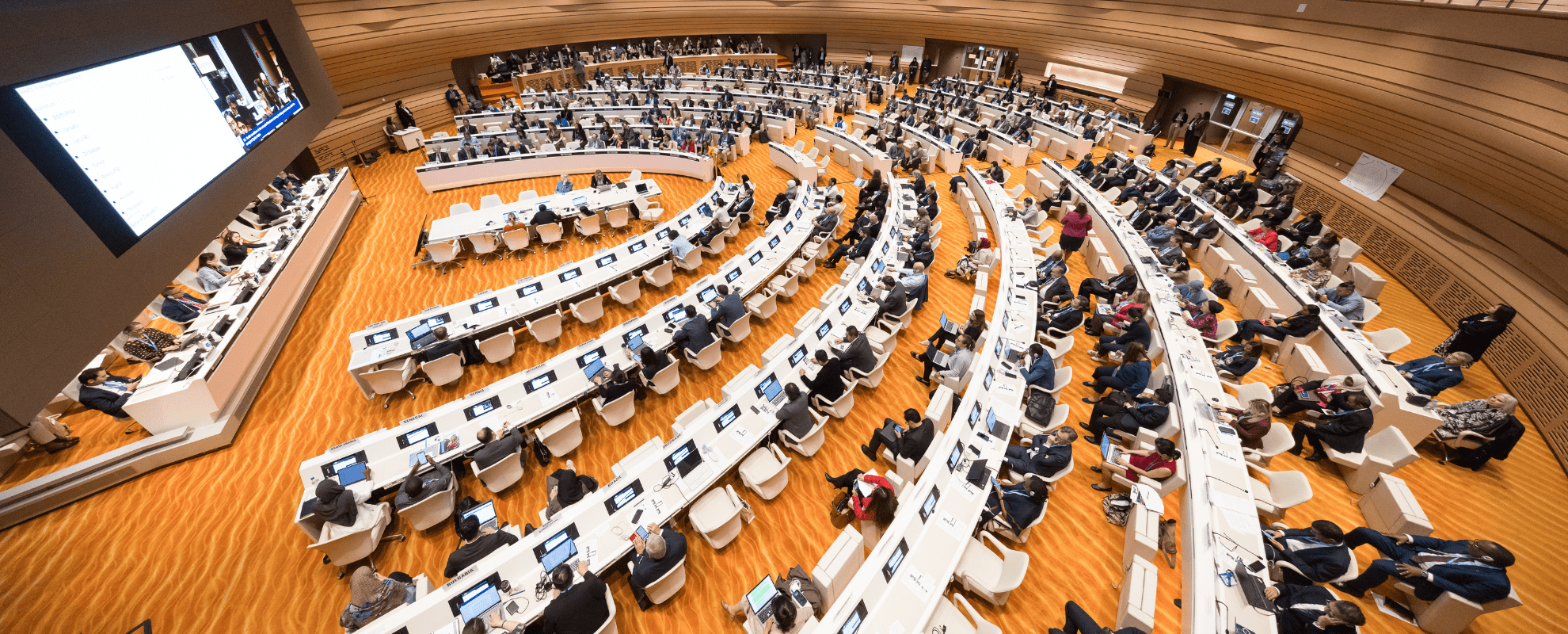
On 24 May 2025, just over two hours into Committee A at the 78th World Health Assembly, something remarkable happened. Member States officially adopted the first-ever global resolution on rare diseases. This moment represents a major milestone for more than 300 million people around the world living with a rare disease, including those affected by Immune Thrombocytopenia (ITP).
The resolution, titled “Rare diseases: a global health priority for equity and inclusion”, recognises rare diseases as a significant public health concern. It calls on all governments to integrate rare diseases into national health systems, expand access to timely and accurate diagnosis, improve care and treatment pathways, and ensure that people with rare diseases and their families are supported throughout their lives.
For the ITP community, this global recognition is long overdue.
Immune Thrombocytopenia is a rare autoimmune condition where the immune system destroys platelets — the blood cells that help control bleeding. It can cause unexplained bruising, serious bleeding, and debilitating fatigue. For many, getting a diagnosis takes time, and understanding or accessing treatment options can be even more difficult. People living with ITP often navigate a system that doesn’t fully understand their condition, leading to unnecessary delays, anxiety, and isolation.
The adoption of this resolution is a signal that this must change.
Rare Diseases International, in collaboration with more than 275 civil society organisations across the globe, played a key role in advocating for this resolution. Their message was clear: people with rare diseases deserve to be seen, heard, and supported at all levels of the health system. This resolution is a direct response to that call.
The resolution outlines a number of important commitments:
Developing national policies to address rare diseases.
Improving early diagnosis through newborn screening and access to specialists.
Supporting mental health and wellbeing for patients and their carers.
Strengthening primary healthcare and ensuring universal health coverage includes people with rare diseases.
Involving patient organisations in policy and decision-making processes.
These commitments provide a strong foundation, but implementation is key. The next step will be the development of a Global Action Plan on Rare Diseases, which will guide how countries can put these ideas into practice. ITPANZ is committed to ensuring that people living with ITP have a voice in this process and are included in global, regional, and national efforts to improve care for rare diseases.
This is not just a health issue — it’s an equity issue. People living with rare diseases often face stigma, financial hardship, and systemic barriers to care. This resolution recognises those challenges and calls for a coordinated, inclusive response.
At ITPANZ, we know the journey isn’t over. But this moment matters. It affirms that ITP and other rare diseases are not invisible. It shows that progress is possible when communities, clinicians, advocates, and policymakers work together.
We thank the 41 Member States who co-sponsored the resolution, the WHO Executive Board for bringing it forward, and every individual and organisation who contributed to its adoption.
We’ll continue to push for meaningful change, so that every person living with ITP can access the care, support, and respect they deserve.