Written by Dr Cindy Neunert, Paediatric Hematologist & Medical Advisor
The first week of December, when the American Society of Hematology (ASH) holds its annual meeting, is always a busy time for hematologists.
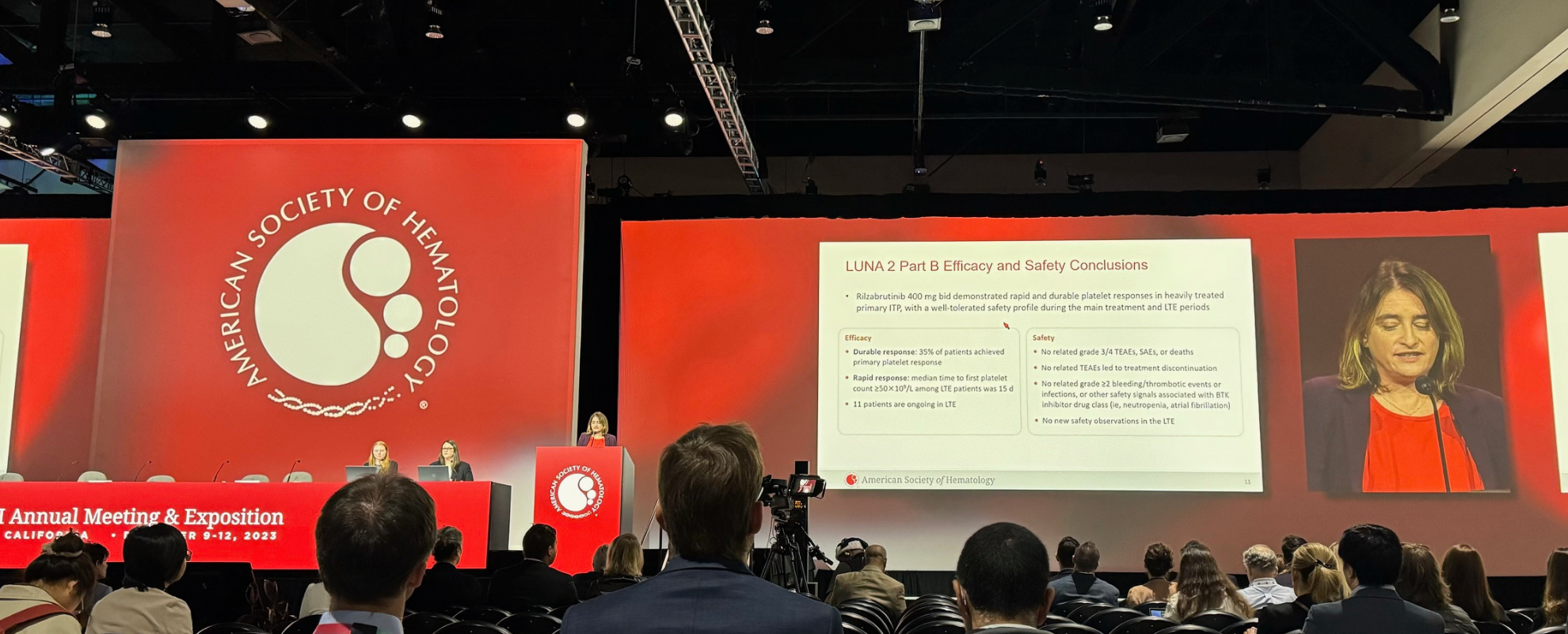
The first week of December, when the American Society of Hematology (ASH) holds its annual meeting, is always a busy time for hematologists. This year approx. 30,000 hematologists from over 100 countries came together to collaborate, advocate for patients, and all get the latest updates on ITP. During this year’s meeting there were 3 sessions dedicated to ITP and platelet disorders.
Session 1: Innovative Treatments for ITP
 During this session, speakers presented results from clinical trials on novel treatments for ITP. One trial was using the drug rilzabrutinib, a bruton tyrosine kinase inhibitor, to treat adults with ITP. Bruton tyrosine kinase is an important signaler of the immune system that was given to patients for a total of 24 weeks. 35% of the patients were able to have a platelet count > 50 x 109/L for at least 8 of the last 12 weeks of the study.
What is exciting is that patients seem to respond rather quickly to the medication with many patients showing a response as early as two weeks. It is encouraging that this study was open to patients who relapsed after corticosteroids without needing to fail several additional therapies first or have persistent or chronic ITP.
This means that now we may have treatments that are approved for patients to get earlier in the course of their disease. It was also shown that this medication was easy for patients to take without a lot of side effects and it improved their health-related quality of life.
Results from a study on Efgartigimod were also presented. Efgartigimod is a neonatal Fc receptor blocker. It works to prevent the antibodies that cause ITP from recirculating. This leads to less antibodies available to bind to the platelets and clear them. In the ADVANCE IV study adults with persistent or chronic ITP were treated with either efgartigimod or a placebo (a non-drug infusion) for 24 weeks.
The drug was given IV every week for 4 weeks and then either continued every week or switch to every other week depending on the patient’s response. The study showed efgartigimod provided a rapid increase in the platelet count, as early as 7 days. This drug may also provide a quick increase in the platelet count for patients who need it. It will be exciting to continue to see the development of these new drugs for patients with ITP.
Session 2: Clinical Practice, Natural History, and Patient Reported Outcomes
 During this session several presentations focused on how ITP affects patients and how we might try to make that better. One presentation addressed the need for advanced treatments in adult patients with ITP for longer than 3 months. Despite starting a second-line treatment, many patients in this group had to switch medication, be treated for bleeding, or be hospitalized. This is an important study showing the need for novel treatments and the impact of ITP on patients.
In addition, we learned that patients with ITP may have an increased risk for infection, especially within the first year of
treatment. We don’t know from this presentation if this is related to the treatment that patients were receiving but it is always important as a patient to ask if any medication you are starting will increase your risk of infection and what you can do to try to prevent infections.
Lastly, there was a presentation on the use of the thrombopoietin-receptor agonist, avatrombopag, earlier during ITP. Even in patients with newly diagnosed ITP avatrombopag was good at increasing the platelet count and could improve the quality of life of patients if used sooner.
Session 3: ITP in Special Populations
 There were two presentations on ITP during pregnancy at this session. The first discussed women who developed ITP during their pregnancy and were followed for 6 months after the baby was born. ITP occurred equally during all trimesters of the pregnancy. When compared to women who had ITP prior to their pregnancy, these women had similar platelet counts and bleeding, however they were more likely to receive ITP interventions. The babies born to these mothers were also at risk for having neonatal ITP and many of the women continued to have ITP following the pregnancy. A second study compared treatment with just prednisone to treatment of prednisone and IVIg for pregnant women with ITP. While the women who got both medications had a faster increase in their platelet count there was no difference in treatment needed at delivery, type of delivery, or in the platelet counts of their babies. These two presentations highlight the importance for doctors to recognize a new low platelet count during pregnancy as ITP and for women with ITP to get specialty care during pregnancy and following delivery.
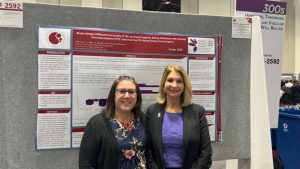
These updates provide only a brief overview of approximately 200 abstracts related to ITP, including poster presentations on data from the ITP Natural History Study Registry and iWISH study. What an amazing impact to have the patient experience recognized and presented at the meeting.
It was wonderful also to see familiar faces like your very own Danielle Boyle, Mervyn Morgan from the UK ITP Support Association, and Caroline Kruse of the PDSA at the meeting making sure that the voice of patients is heard by physicians across the globe.
Danielle’s Message: This was my first time attending ASH. Despite ITP being a rare disease, the annual meeting included over 200 abstracts, with numerous opportunities to connect with representatives, including ITP clinicians, including our newest Advisor, Cindy, sponsors and supporters. A special thank you to Caroline Kruse from the PDSA for making us feel welcome at her annual industry meeting and to Mervyn Morgan from the UK ITP Support Association for being my conference buddy during the event.
 Danielle’s Message: